plae
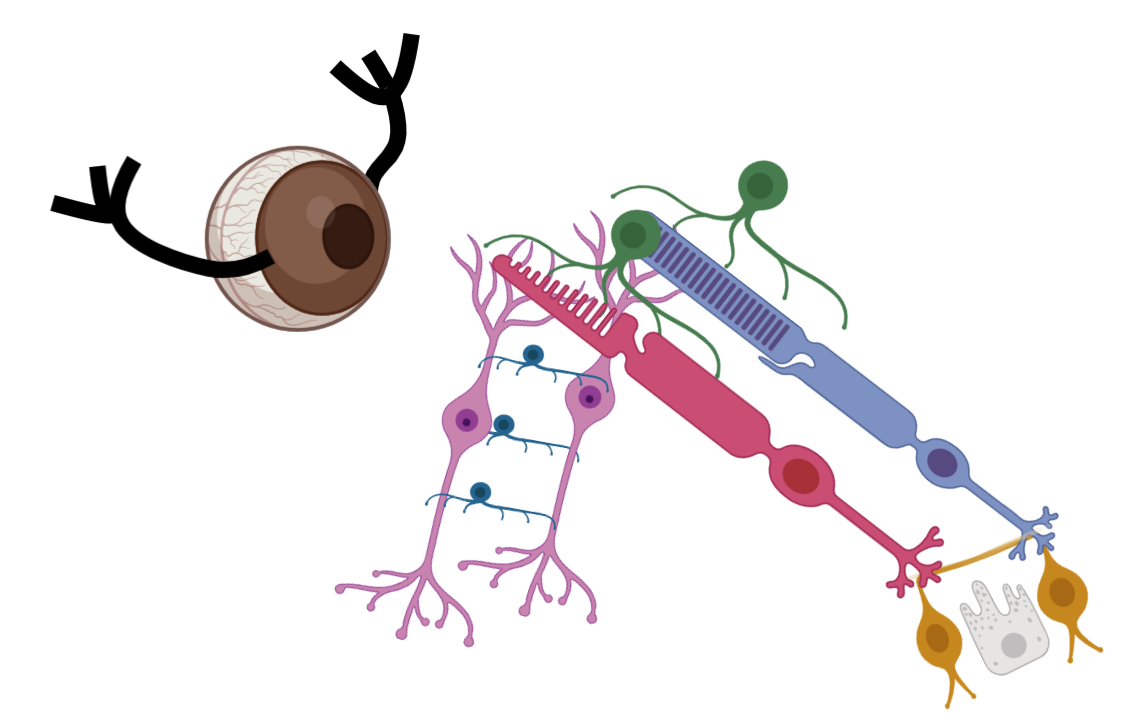
The light-sensitive portion of the eye is the retina. The retina itself is not a monolithic tissue - there are over 10 major cell types. The cones and rods which convert light into signal are supported by a wide variety of neural cell types with distinct roles in interpretting and transmitting the visual signal to the brain. Behind the retina is the RPE and vasculature, which supports the high energetic needs of the rods and cones. In front of the retina is the clear lens and cornea, which shape the light onto the retina. scEiaD is a meta-atlas that compiles 1.1 million single-cell eye and body tissue transcriptomes across 44 datasets, 35 publications, and 4 species. Deep metadata mining, rigorous quality control analysis, differential gene expression testing, and deep learning based batch effect correction in a unified bioinformatic framework allow the universe of ocular single cell expression information to be analyzed in one location.